
Choosing an IB school is one of the most important decisions a parent can make. It often involves hours of research, comparing school websites, reading reviews, browsing forums, and seeking recommendations from friends and parent communities. With every school claiming to offer the best, it is worth stepping back to ask a simpler question. What truly makes an IB school exceptional?
At Indus International School Hyderabad, we believe the answer has less to do with marketing and more to do with what happens inside the classroom every single day.
What Role Does Teacher Training Actually Play?
The IB curriculum is built around inquiry. Children are expected to ask questions, connect ideas across subjects, and think for themselves rather than memorise answers. This only works if teachers are trained to teach this way, consistently, and not just once at the start of their career.
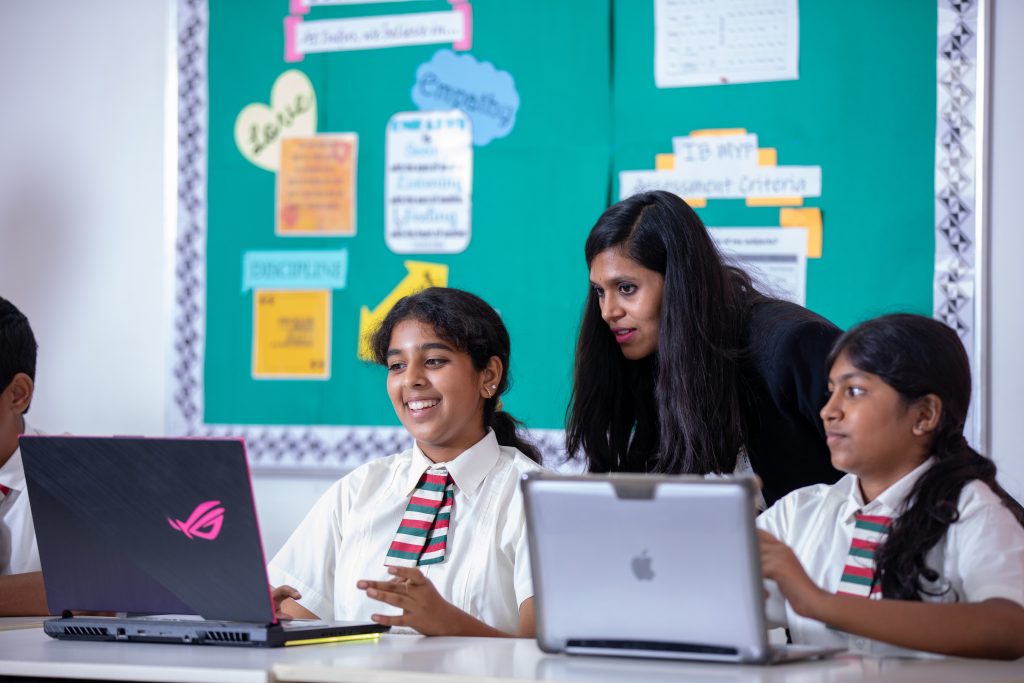
Our teachers go through structured IB training and continuous workshops through the year. This is not a one time certification filed away and forgotten. It shows up in how a Grade 6 science class is run, or how a Grade 11 student is guided through their Extended Essay. Good teaching in the IB system is less about delivering content and more about asking the right question at the right moment.
Primary Years Programme
ages 3 to 12,
Roughly nursery through grade 5
Middle Years Programme
Ages 11 to 16
Grades 6 through 10.
Diploma Programme
Ages 16 to 19,
Grades 11 and 12.
IB Career related Programme
Ages 16 to 19,
An alternative to the DP for students who want a more career focused final two years.
Does the IB Diploma Programme Get Real Support, or Just a Timetable?
Many schools offer the IB Diploma Programme on paper. Far fewer build the ecosystem around it that students actually need, including subject specialists for every DP subject, a dedicated CAS coordinator, a Theory of Knowledge teacher who genuinely enjoys the subject, and enough one on one time for students working through their Extended Essay.
At Indus Hyderabad, students in the DP programme get regular access to subject teachers outside class hours. This matters more than it sounds. A student stuck on a tricky Math AA problem, or unsure how to frame their History Internal Assessment, needs that access when the doubt comes up, not two days later.
Class Size: A Small Detail That Changes Everything
Ask any IB coordinator and they will tell you the same thing. Small class sizes are not a nice to have in the Diploma Programme, they are close to essential. Subjects like Theory of Knowledge or Extended Essay guidance work best in small groups, where a teacher can track how each student's thinking develops over the two years.
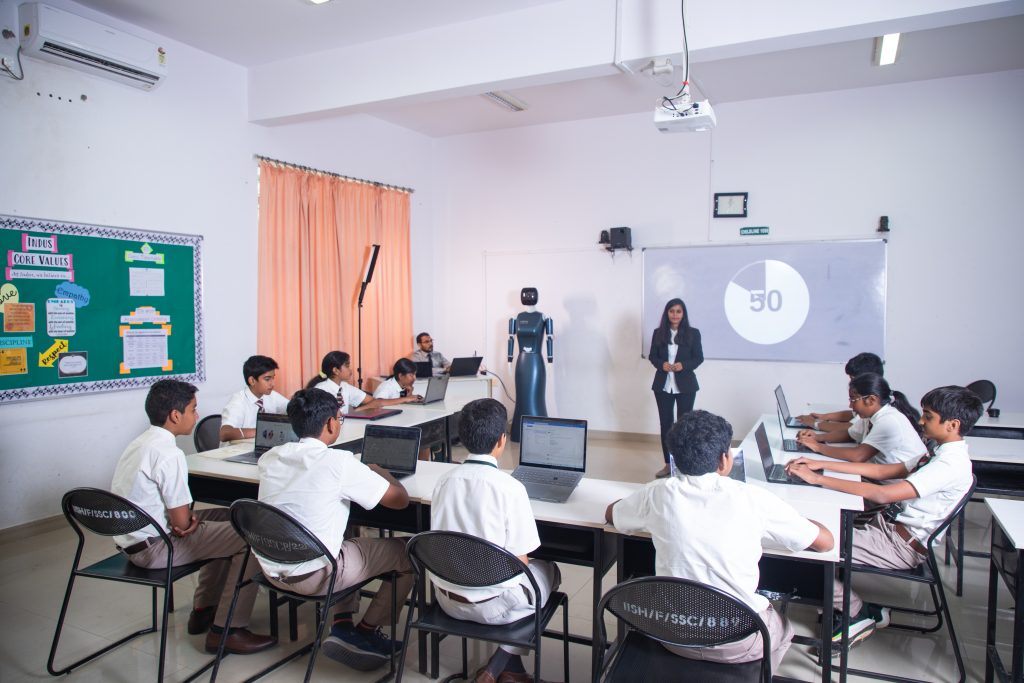
When a DP class has thirty or more students, the teacher simply cannot give the kind of individual feedback that IB assessment expects. At Indus Hyderabad, DP subject groups are kept deliberately small, which means students get feedback on their essay drafts and lab reports within days, not weeks. It is a small detail that rarely makes it into a brochure, yet it ends up mattering a great deal by the time exams come around.
Do Results Reflect One Good Batch, or Real Consistency?
Every school will point to a topper or two. What tells you more is whether strong outcomes happen year after year, across different batches of students with different strengths and starting points.
That kind of consistency comes from a stable teaching faculty, a curriculum followed with discipline, and a school culture where academic rigour and student wellbeing are both taken seriously, not one sacrificed for the other. At Indus Hyderabad, DP results are reviewed batch over batch internally, not celebrated once and set aside.
Why the IB Career Programme Deserves More Attention
Most conversations around IB in Hyderabad focus on the Diploma Programme, and understandably so. Yet the IB Career Programme deserves more attention than it usually gets. It suits students who know they want a more applied, career linked path while still keeping the rigour and global recognition of an IB qualification.
At Indus Hyderabad, the IB CP is treated with the same seriousness as the DP, with career related coursework built around real world skills alongside core IB subjects.
Wellbeing and Rigour: Working Together, Not Against Each Other
There is a common assumption that a demanding curriculum like the IB comes at the cost of a child’s wellbeing. We would push back on that. The two are not opposites, and schools that get this right design them together.
This means building in enough free periods for students to work on their Internal Assessments during school hours, having counsellors who understand the specific pressure points of the DP timeline, and teachers who can tell the difference between a student who needs to be pushed harder and one who needs a bit of breathing room.
Frequently Asked Questions
Look for dedicated time for Theory of Knowledge, CAS activities, and independent study, not just six subjects stacked back to back. A well structured timetable protects this time rather than pushing it to evenings and weekends.
Many strong DP programmes keep subject groups well under twenty five students, since regular one on one feedback becomes difficult to sustain in larger classes.
No. The IB CP maintains the same academic seriousness as the DP, while adding a career related, applied dimension to the coursework.
What This Means for Parents Comparing Schools
If you are shortlisting IB schools in Hyderabad, here are a few honest questions worth asking on your school visit. How many years has the school actually run the DP programme, not just offered it? What is the average class size for DP subjects? How much one on one support does a student get for their Extended Essay and Internal Assessments? Are CAS activities structured and tracked, or left entirely to the student?
The answers to these questions usually tell you more than any ranking list. These are the same questions our IB coordinators expect and welcome during campus visits, since they tend to give parents a far clearer picture than a brochure ever could.
A Quiet Kind of Confidence
We are not going to claim we are the best fit for every child. No school is. What we can say is that our approach to IB education is built on training, consistency, and genuine support rather than promises. Parents who visit our campus and speak with our IB coordinators usually come away with a clearer picture of what a strong IB education actually looks like day to day. If you are exploring IB schools in Hyderabad or Telangana for your child, we would be glad to walk you through our DP and CP programmes in more detail, and to answer the harder questions a brochure usually cannot.