
Walk into any school admissions fair in Hyderabad and you will see the word international everywhere, on banners, brochures, and school gates. But what does the word actually mean, and how do you tell a genuinely international school apart from one that has simply added the word to its name?
This is one of the most common questions we hear from parents exploring international schools in Hyderabad and across Telangana. Here is an honest breakdown of what to actually look for.
Is It About the Curriculum, or Just the Name?
A truly international school usually follows an internationally recognised curriculum, such as the IB, rather than a state or national board with a few extra subjects added on. The difference is not cosmetic. These curriculums are designed differently from the ground up, with a focus on inquiry, global perspectives, and skills that transfer across countries and universities.
At Indus International School Hyderabad, our curriculum is built around the IB framework from the early years right through to the diploma years. This is not an add on option. It is the core of how the school runs.
Primary Years Programme
ages 3 to 12,
Roughly nursery through grade 5
Middle Years Programme
Ages 11 to 16
Grades 6 through 10.
Diploma Programme
Ages 16 to 19,
Grades 11 and 12.
IB Career related Programme
Ages 16 to 19,
An alternative to the DP for students who want a more career focused final two years.
Why Diversity in the Classroom Matters More Than a Photo in a Brochure
A genuinely international school usually has some real diversity, whether that means students from different states and countries, teachers trained internationally, or a mix of cultural perspectives built into how subjects are taught.
This matters more than people expect. A classroom where children are exposed to different viewpoints from a young age tends to produce more adaptable, open minded students later in life. At Indus Hyderabad, this diversity is not incidental. Our boarding programme brings together students from across the country, alongside a faculty mix trained both in India and abroad, so this exposure becomes part of daily school life rather than an occasional cultural day.
How Do You Check If Global Recognition Actually Counts?
One practical way to check if a school is genuinely international is to ask where its students go after graduation. Are they getting into universities abroad as well as in India? Is the qualification they receive recognised by universities outside the country without additional exams or bridge courses?
An IB Diploma, for instance, is recognised by universities across the world, giving students genuine flexibility when it comes to choosing where they want to study next. Schools that take this seriously, ours included, actively track where their graduating students go on to study, since it says a great deal about how well the curriculum is preparing them for what comes next.
What Do Facilities Built for a Broader Education Look Like?
International education is not only about academics. It usually comes with facilities and programmes that support a more rounded kind of growth, including strong arts and sports programmes, opportunities for community service, and space for students to explore interests outside the core curriculum.
At Indus Hyderabad, this shows up in how much time is set aside for CAS activities, sports, and creative pursuits alongside academic work, rather than treating these as optional extras squeezed in after exams.
Do Teachers Matter as Much as the Curriculum Itself?
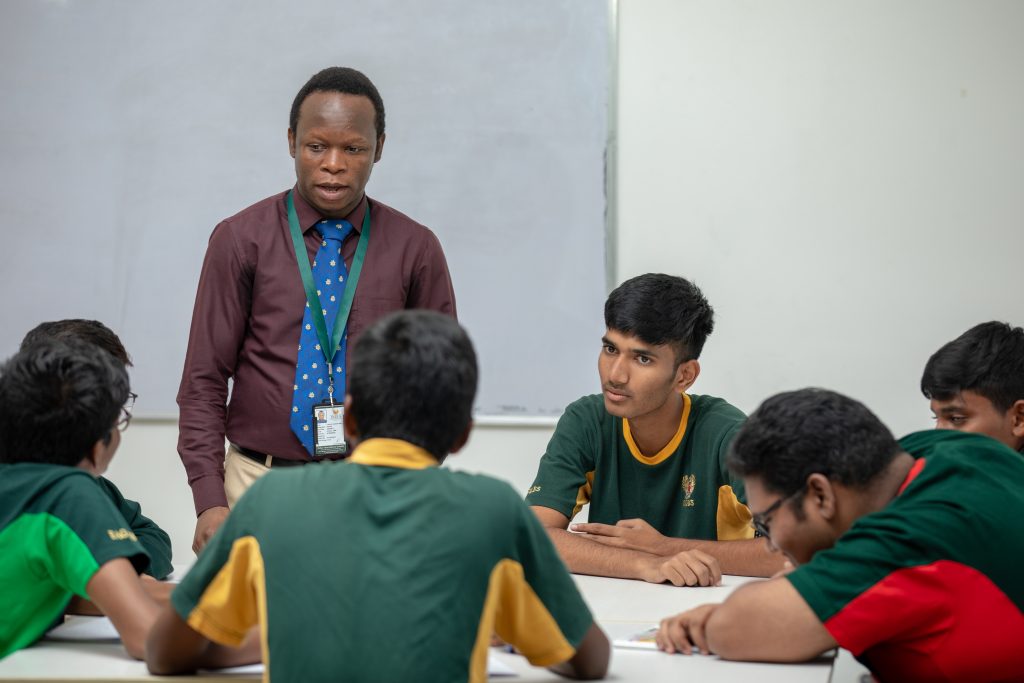
A curriculum is only as good as the people teaching it. One thing worth checking during a school visit is how teachers are trained and how long they tend to stay. High teacher turnover is often a quiet warning sign, since consistency in teaching staff usually shows up directly in how well a curriculum is delivered year after year.
At Indus Hyderabad, teachers go through structured training tied specifically to the IB framework, and many have been with the school long enough to understand how the curriculum builds from one grade to the next. That continuity tends to matter more than parents expect when it comes to how confidently a child moves through the years.
Language, Culture, and a Genuinely Global Outlook
Part of what makes a school international is how it treats language and culture beyond just the medium of instruction. Many schools that call themselves international still limit exposure to a single language and a fairly narrow cultural lens.
A stronger approach includes access to additional languages, cultural events that go beyond a single annual day, and a curriculum that actively brings in global perspectives rather than treating them as an occasional add on. At Indus Hyderabad, this plays out through the language options built into the curriculum from an early age, alongside a school calendar that treats cultural exchange as a running theme rather than a single event.
How Is Assessment Different in a Truly International Setting?
One underrated marker of a genuinely international school is how it assesses students. Many Indian curriculums lean heavily on final exams and rote recall. International curriculums, especially the IB, spread assessment across the year through internal assessments, coursework, presentations, and projects alongside final exams.
This matters because it prepares students for how most universities abroad actually evaluate coursework, where continuous assessment and independent research are the norm rather than the exception. It is one of the reasons we place equal weight on internal assessments and coursework at Indus Hyderabad, rather than treating final exams as the only marker of a student’s progress.
What Does Community Life Look Like Day to Day?
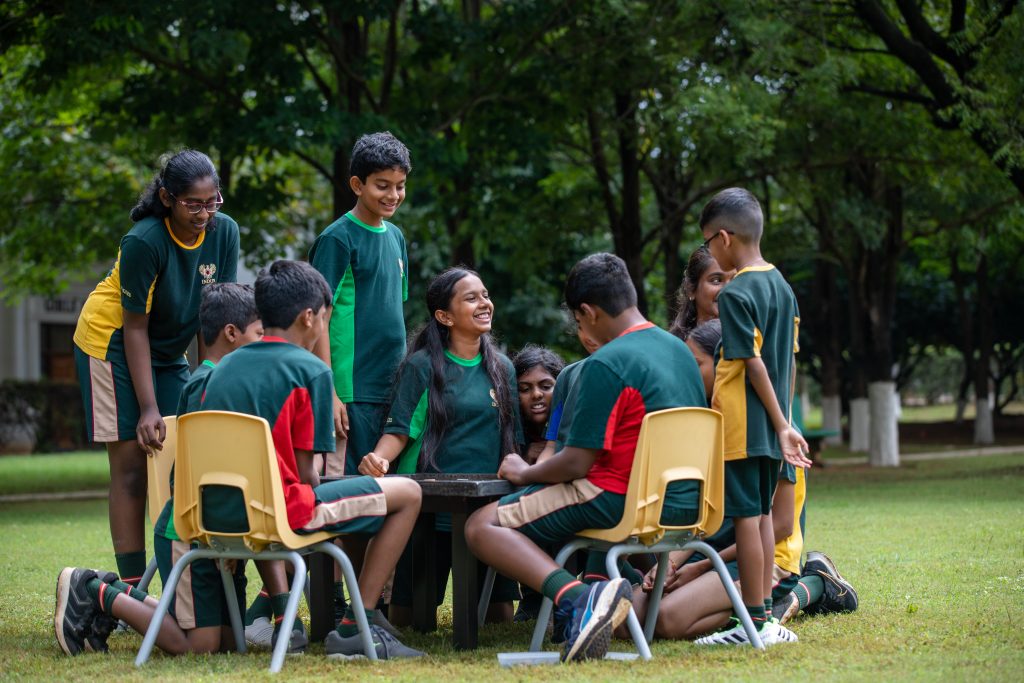
Beyond formal facilities, a genuinely international school tends to have an active daily rhythm outside the classroom, clubs that actually meet regularly, house or team based competitions, and a calendar full of events students look forward to rather than a handful of annual functions.
At Indus Hyderabad, students take part in everything from chess and robotics to sports leagues and startup style projects throughout the year, alongside CAS commitments that count toward their Diploma Programme requirements. This kind of steady, varied activity is often a better indicator of school culture than any single facility a campus tour might show you.
Boarding or Day School: Which Fits Your Family?
Many international schools, including ours, offer both boarding and day school options. This flexibility matters for families who may be relocating, working in demanding careers, or simply want their child to experience a more independent, structured routine while still living close enough for regular family time
Frequently Asked Questions
An internationally recognised curriculum such as the IB, taught consistently from the early years through to the diploma years, rather than added on as an optional extra to a national board syllabus.
Many do, particularly in IB Diploma Programme subjects, since curriculums built around coursework and internal assessment depend on regular, individual feedback that is harder to sustain in large classes.
No. Boarding is one option many international schools offer, but day schooling can deliver the same curriculum and outcomes for families who prefer their child at home each evening.
A Few Honest Questions to Ask While Shortlisting
Before choosing a school because it calls itself international, ask a few direct questions during your visit. Which curriculum board does the school actually follow, and for how many years has it taught that curriculum? Where have recent graduating batches gone for higher studies? How much of the school day is spent on subjects beyond the core academic curriculum? Is there real diversity among students and teaching staff, or is it mostly in name?
These questions tend to separate schools that are genuinely international from ones that use the word loosely. They are also the exact questions our admissions team expects during a campus visit, and we would rather answer them directly than have parents guess.
Our Take
Part of what makes a school international is how it treats language and culture beyond just the medium of instruction. Many schools that call themselves international still limit exposure to a single language and a fairly narrow cultural lens.
A stronger approach includes access to additional languages, cultural events that go beyond a single annual day, and a curriculum that actively brings in global perspectives rather than treating them as an occasional add on. At Indus Hyderabad, this plays out through the language options built into the curriculum from an early age, alongside a school calendar that treats cultural exchange as a running theme rather than a single event.